-
English


Today, LED screens appear everywhere—from stadiums and shopping malls to concerts and exhibitions. Their bright colors and large size make them one of the most powerful visual tools in modern advertising and entertainment. However, LED display technology did not appear overnight. It developed step by step over several decades.
This article explores the early types of LED screens and how display technology evolved. Finally, we will look at how modern innovations—such as spherical and circular LED screens—are pushing the industry into a new creative era.
Before LED technology became practical, large public displays used other types of systems. Engineers experimented with different solutions to show information on big screens.
For example, early stadium displays often relied on incandescent lamps to show simple numbers and letters. These systems worked well for scoreboards but could not display video or detailed graphics.
Later, manufacturers developed large CRT-based video walls. Systems such as Sony Jumbotron, Panasonic Astrovision, and Mitsubishi Diamond Vision used tiny cathode-ray tubes to create each pixel.
In these systems:
Although these displays could show full-color video, they had several problems. They were extremely heavy, difficult to maintain, and required complex wiring systems. Because of these limitations, engineers continued searching for better display technology.
The development of LED displays began in the 1960s. In 1962, engineers invented the first visible red LED.
Soon after that, researchers started using LEDs in display devices. In 1969, engineers at Hewlett-Packard introduced the HP Model 5082-7000, one of the first practical LED displays. It could show numbers and simple characters using small red LEDs.
These early LED displays had several characteristics:
Even though these displays were simple, they proved that LED technology could work as a digital display system.
As LED technology improved, manufacturers began building larger LED displays. During the 1980s, LED matrix displays became more common in outdoor applications.
These screens could show text, animations, and basic graphics. Cities installed them in locations such as:
However, these screens still used only one or two colors. The lack of blue LEDs prevented true full-color displays.
A major breakthrough happened in 1989 when scientists developed efficient blue LEDs. This innovation allowed engineers to combine red, green, and blue LEDs to create full-color displays.
By the 1990s, RGB LED screens could display millions of colors and play real video content.
These full-color LED displays quickly replaced older technologies in many industries, including:
At the same time, LED modules became smaller and lighter, making large video walls easier to build and install.
In the 2000s, LED display technology continued to improve. Manufacturers reduced pixel pitch and increased resolution. As a result, LED screens moved from outdoor billboards to indoor environments such as retail stores, conference centers, and broadcast studios.
Another important development was the introduction of flexible LED modules. These modules allowed screens to bend and form curved surfaces.
This innovation opened the door to more creative designs beyond traditional flat screens.
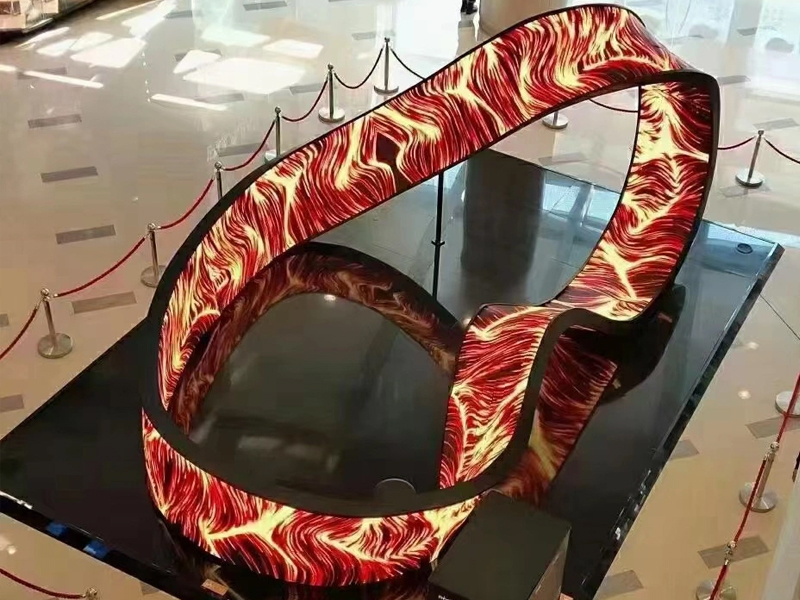
Today, LED displays are no longer limited to rectangular video walls. Designers now use flexible modules and advanced structures to create many different shapes.
For example, manufacturers like Toosen produce customized creative LED displays that turn screens into visual attractions. Popular designs include:
A Toosen spherical LED screen, for example, surrounds viewers with a 360-degree visual experience. This type of display works well for immersive presentations or digital art installations.
Similarly, round LED displays can become a central feature in commercial spaces. Retail brands often place them above atriums or stages to attract attention and create memorable visual effects.
These creative designs show how far LED technology has evolved—from simple numeric indicators to complex digital sculptures.
The evolution of LED screens continues today. Technologies such as MicroLED, MiniLED, and flexible displays are pushing the limits of brightness, efficiency, and design possibilities.
At the same time, demand for unique visual experiences keeps growing. Businesses no longer want ordinary screens—they want displays that stand out.
This trend explains why creative LED solutions, including spherical, circular, and other special-shaped displays from companies like Toosen, are becoming increasingly popular worldwide.
The history of LED screens shows a clear path of innovation:
Today, LED displays are not just screens—they are architectural features and digital art platforms. From massive stadium video walls to innovative spherical LED displays by Toosen, the technology continues to redefine how people experience visual media.
+86 18688923792
+86-755-23312336
4th Floor, Building B, Zhonghe Building, Taiwan Industrial Zone, 2132 Songbai Road, Shiyan Street, Bao'an District, Shenzhen.


Emall us with any questions or inquiries or use our contact data.We would be happy to answer your questions.
Toosen Professional Manufacturer of led sphere display,led screen globe,led ball display,spheric led screen,spherical led display, Led Special-shaped LED manufacturer, LED factory,Manufacturers & Suppliers,Factory & Exporters. Looking forward to your cooperation.
Copyright © 2010-2026 Toosen LED All Rights Reserved
Theme by WordPress