-
English


Choosing the right pixel pitch is important when planning a sphere LED display. If the pixel pitch is too large, images may look rough when people stand close to the screen. If it is too small, the project may cost more than necessary.
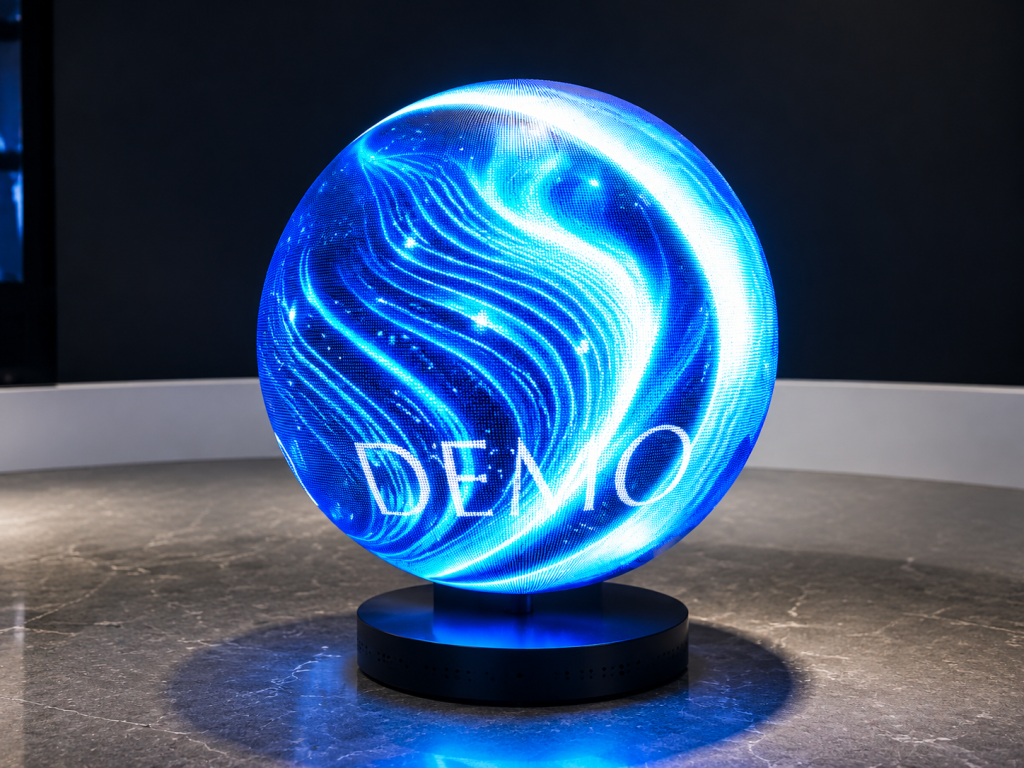
So, how do you choose the right pixel pitch for a spherical LED display? The answer depends on viewing distance, screen diameter, content, and installation environment.
Pixel pitch is the distance between the centers of two neighboring pixels, measured in millimeters. A smaller pixel pitch means more pixels in the same area, which usually produces sharper images.
For example, a P2.5 LED sphere has a pixel pitch of 2.5 mm, while a P5 screen has a pitch of 5 mm. P2.5 is generally better for close viewing, while P5 can work well for larger displays viewed from farther away.
However, pixel pitch is not the only factor that determines image quality. Screen size, brightness, content, and viewing angle also affect the final result.
Viewing distance affects how clearly people can see individual pixels. When viewers stand close to a sphere LED display, they may notice gaps between pixels if the pitch is too large. This can make text, logos, and detailed images look less clear.
At a greater distance, individual pixels become less noticeable. A larger pixel pitch may then provide a good viewing experience at a lower cost.
This is especially important for spherical screens because people can view them from different directions. The display should look good from the main viewing areas, not just from one fixed position.
A simple starting point is to use the approximate viewing distance in meters as a guide for pixel pitch in millimeters.
Basic rule:
Recommended pixel pitch (mm) ≈ viewing distance (m)
For example:
These values are starting points, not strict limits. The best choice depends on image detail, ambient light, budget, and the actual screen design.
For a small LED sphere in a shopping mall, visitors may stand less than one meter away. A fine pitch such as P1.5 or P1.8 can help display detailed content. For a large outdoor sphere viewed across a public square, P5, P8, or P10 may be more practical.
Viewing distance alone is not enough. The diameter of the sphere also affects how the display looks in its surroundings.
A small sphere placed on a reception desk needs clear images because people can approach it closely. A large sphere installed above a city plaza needs enough brightness and visibility to attract attention from a distance.
Content matters, too. Text, maps, product images, and detailed animations usually benefit from a finer pixel pitch. Simple color patterns, large logos, and moving visual effects may work well with a coarser pitch.
The goal is to balance image quality with project cost instead of automatically choosing the smallest available pixel pitch.
Before confirming a specification, check the actual viewing distance and the positions where people are likely to stand.
If possible, view a sample display or a comparable screen at the expected distance. Test the content you plan to use, including text, logos, moving images, and different colors.
For an indoor project, check image detail under normal room lighting. For an outdoor installation, also consider sunlight, brightness, weather protection, and viewing distance during the day.
A practical test can help you avoid paying for a finer pitch that viewers may not notice, or selecting a coarse pitch that makes important content difficult to see.
A spherical LED display uses specially shaped flexible LED modules assembled into a curved structure. The modules, frame, control system, and mounting method must work together to create a consistent 360-degree viewing experience.
TOOSLED offers spherical LED display solutions for indoor and outdoor projects, with pixel pitches ranging from P1.2 to P10 and customized diameters for different applications.
Smaller pitches are suitable for many close-viewing indoor installations, while larger pitches can be considered for large outdoor screens. The final configuration should also account for structural support, installation height, maintenance access, and environmental protection.
In shopping malls and exhibition halls, a compact sphere LED display can attract attention with detailed promotional content. A finer pixel pitch is often useful because visitors may stand nearby.
In museums and science centers, spherical displays can show planets, maps, and educational animations. Image detail and smooth content are important for an engaging experience.
For outdoor landmarks and public spaces, large LED spheres can display advertising, event visuals, and branded content. Since viewers are usually farther away, a larger pixel pitch may offer a sensible balance between visibility and cost.
Q1: Is a smaller pixel pitch always better?
No. A smaller pitch can improve detail at close range, but it usually costs more. Choose it when the viewing distance and content justify the extra resolution.
Q2: What pixel pitch is best for an outdoor sphere LED display?
P5, P8, and P10 may suit larger outdoor installations viewed from farther away. Smaller outdoor projects may require P2.5 or P3. The final choice depends on distance, brightness, and content.
Q3: Can pixel pitch be customized for a spherical LED screen?
Yes. Pixel pitch and sphere diameter can be selected according to project requirements, subject to the available module designs and technical specifications.
The right sphere LED display should match your viewing distance, screen diameter, content, and installation environment. Choosing the correct pixel pitch from the beginning can improve image quality and help control project costs.
TOOSLED provides customized spherical LED display solutions for different sizes and applications. Share your required diameter, viewing distance, and indoor or outdoor installation details with our team to discuss a suitable configuration.
+86 18688923792
+86-755-23312336
4th Floor, Building B, Zhonghe Building, Taiwan Industrial Zone, 2132 Songbai Road, Shiyan Street, Bao'an District, Shenzhen.


Emall us with any questions or inquiries or use our contact data.We would be happy to answer your questions.
Toosen Professional Manufacturer of led sphere display,led screen globe,led ball display,spheric led screen,spherical led display, Led Special-shaped LED manufacturer, LED factory,Manufacturers & Suppliers,Factory & Exporters. Looking forward to your cooperation.
Copyright © 2010-2026 Toosen LED All Rights Reserved
Theme by WordPress