-
English


A mechanical rotating LED screen combines LED display technology with moving parts. It can create impressive visual effects in shopping malls, exhibitions, and stage shows. However, movement also brings safety risks that fixed LED screens do not have.
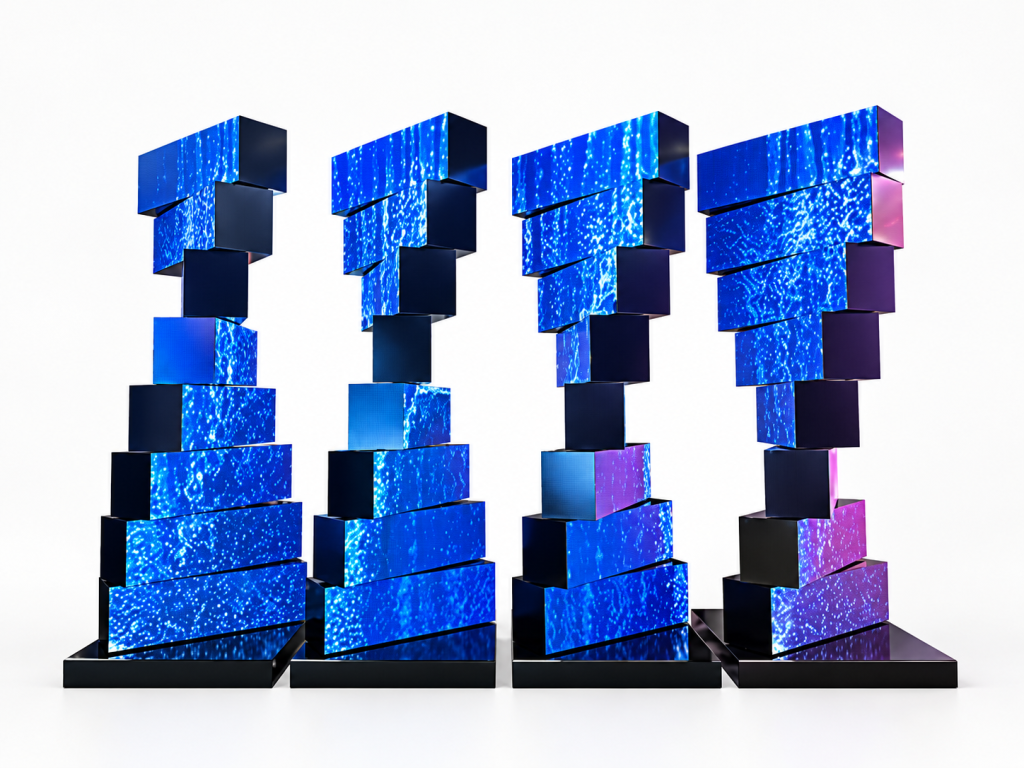
Loose connections, overloaded motors, and faulty emergency stops can cause equipment damage or unexpected movement. These problems may also put nearby people at risk.
That is why mechanical rotating LED screen safety should be checked before installation and shipment. This guide covers the main components, motor testing, load testing, and emergency stop inspection.
A mechanical LED screen needs more than LED panels to operate. Its movement depends on several connected parts working together.
The main components include:
Different mechanical screens use different movement structures. Some rotate around an axis, while others use sliding or telescopic modules.
For example, TOOSLED’s Mechanical Rotating LED Display product range includes modular motion systems with closed-loop DC stepper motors, synchronous belt transmission, and programmable motion control.
Before testing, technicians should check that all mechanical connections are secure. Moving cables must also have enough clearance to prevent pulling, rubbing, or becoming trapped.
A small problem in one component can affect the entire movement system.
Motor and load testing is an important part of mechanical rotating LED screen safety.
A motor may work normally without a load but develop problems when supporting the full display weight. Testing should therefore cover both basic motor operation and actual working conditions.
Start by inspecting the motor, wiring, and mounting points.
Run the motor at low speed and gradually increase it within the approved operating range.
Check whether:
If the motor makes abnormal sounds or moves unevenly, stop testing and inspect the drive system.
The total moving load includes the LED modules, supporting frame, cables, and attached accessories.
For rotating structures, technicians must also consider load balance and the forces created during acceleration and braking.
Load testing should use the manufacturer’s approved limits and test procedures.
During testing, observe the support structure, bearings, connections, and motor performance. Any unexpected bending, movement, or overheating requires further inspection.
Never exceed the rated load to test the strength of a system without an approved engineering procedure.
A screen may operate correctly during a short demonstration but develop problems after repeated movement.
Run the approved motion sequence under normal operating conditions.
Check motor temperature, vibration, positioning accuracy, and cable movement throughout the test.
Repeated testing helps identify problems that may not appear during the first operation.
An emergency stop system is essential for mechanical LED displays used near visitors, workers, or performers.
If unexpected movement occurs, the system must be able to stop hazardous motion safely.
Before testing, keep the movement area clear and use a controlled test procedure.
Follow these steps:
The stopping time and distance must meet the project’s risk assessment and approved design requirements.
Limit switches help prevent a moving screen from exceeding its permitted travel range.
Anti-collision sensors can provide additional protection where moving parts may approach obstacles.
Technicians should test these devices individually and verify the controller’s response.
TOOSLED’s mechanical matrix display specifications describe limit switches, anti-collision sensors, and motion protection functions.
However, each completed installation still requires its own safety verification.
Safety devices should never be bypassed simply to keep a display running.
Before shipping, the manufacturer should complete a final inspection of the mechanical structure, electrical connections, and display operation.
The following checklist can help organize the process.
| Inspection Item | What to Check |
|---|---|
| Motor | Smooth operation and normal temperature |
| Support frame | Secure connections and no visible damage |
| Load | Within approved design limits |
| Transmission | Correct alignment and belt tension |
| Controller | Correct speed, direction, and positioning |
| Emergency stop | Safe stopping and controlled restart |
| Limit switches | Correct response at travel limits |
| Cables | Secure routing and sufficient clearance |
| LED modules | Normal image and signal performance |
| Packaging | Moving parts secured against transport damage |
Inspection results should be recorded before the equipment leaves the factory.
Can a mechanical LED screen operate continuously?
It depends on the motor rating, load, duty cycle, and operating environment. Follow the manufacturer’s approved operating limits.
Is emergency stop testing required after installation?
Yes. Transport and assembly can affect wiring, alignment, and safety devices. The complete system should be checked again before public operation.
Mechanical rotating LED screen safety depends on proper design, motor performance, load control, and reliable emergency stopping.
For exhibitions, shopping malls, and stage installations, careful testing helps reduce equipment failures and unexpected movement.
TOOSLED provides customized mechanical LED display solutions with modular structures and programmable motion control.
Explore the Mechanical Rotating LED Display to learn more about available structures and discuss your project’s movement and safety requirements.
+86 18688923792
+86-755-23312336
4th Floor, Building B, Zhonghe Building, Taiwan Industrial Zone, 2132 Songbai Road, Shiyan Street, Bao'an District, Shenzhen.


Emall us with any questions or inquiries or use our contact data.We would be happy to answer your questions.
Toosen Professional Manufacturer of led sphere display,led screen globe,led ball display,spheric led screen,spherical led display, Led Special-shaped LED manufacturer, LED factory,Manufacturers & Suppliers,Factory & Exporters. Looking forward to your cooperation.
Copyright © 2010-2026 Toosen LED All Rights Reserved
Theme by WordPress