-
English


In modern digital architecture and stage design, visual impact is everything. Designers are constantly pushing the boundaries to create fluid, organic, and immersive structures. However, many projects hit a structural wall when they rely on standard LED cabinets to execute these modern visions. While traditional rigid cabinets excel at building flat, uniform rectangles, they are fundamentally incapable of supporting creative, non-standard geometries.
The core reason why standard LED cabinets cannot create creative shapes lies in their rigid engineering. Traditional units are built on a strict, square grid system designed for stability in flat walls. When installers try to force these rigid frames into curved, angled, or circular configurations, they encounter severe physical blockages. The hardware simply refuses to bend, leading to broken frames, dangerous gaps, and misaligned pixels that ruin the visual presentation.
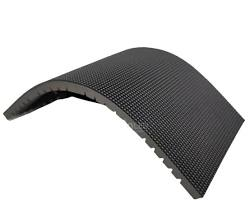
To truly break free from the traditional “square box” constraint, the industry has shifted toward advanced alternatives. Utilizing a flexible LED display allows engineers to bend and contour screens around complex architectural columns or wave structures. For completely unique geometries, moving toward a custom LED display ensures that every curve, sphere, or corner is built precisely to specification without sacrificing structural integrity or visual resolution.
Hardware is only half the battle; content execution matters equally. When standard rental LED display units are mismatched into irregular shapes, control systems often fail to map pixels accurately, resulting in stretched images. Modern shaped LED display technology integrates specialized mapping software and flexible modules. This synergy ensures that whether you are building a smooth cylindrical display or an interactive floor tile LED screen setup, the content flows without distortion..
Standard LED cabinets have a secure place in traditional advertising, but they fail entirely in creative architectural applications. By transitioning to flexible and custom-engineered solutions, creators can finally transform any surface into an uninhibited digital canvas.
1. Can standard LED cabinets be curved mechanically?
No. Forcing standard rigid cabinets into curves causes physical damage to internal circuits and creates massive, unappealing gaps between panels.
2. What is the best hardware choice for circular or wave designs?
Flexible LED modules with soft circuit boards and magnetic mounting systems are the ideal choice for organic, curved shapes.
3. Do custom-shaped LED screens require special content mapping?
Yes. Non-standard shapes require advanced pixel mapping software to prevent image stretching and ensure seamless visual output across curves.
+86 18688923792
+86-755-23312336
4th Floor, Building B, Zhonghe Building, Taiwan Industrial Zone, 2132 Songbai Road, Shiyan Street, Bao'an District, Shenzhen.


Emall us with any questions or inquiries or use our contact data.We would be happy to answer your questions.
Toosen Professional Manufacturer of led sphere display,led screen globe,led ball display,spheric led screen,spherical led display, Led Special-shaped LED manufacturer, LED factory,Manufacturers & Suppliers,Factory & Exporters. Looking forward to your cooperation.
Copyright © 2010-2026 Toosen LED All Rights Reserved
Theme by WordPress