-
English


Large outdoor LED displays have become a defining feature of modern urban landscapes. Thanks to their powerful visual impact, high-resolution performance, and flexible content capabilities, they do far more than deliver advertisements. They also serve as dynamic platforms for public communication, cultural expression, and city branding.
However, behind every impressive display stands a critical yet often overlooked component—the steel structure. This structural framework acts as the “skeleton” of the entire system, and its design and construction quality directly determine the display’s stability, safety, and long-term performance. As LED displays continue to grow in size and complexity, engineers must apply higher standards to structural design, material selection, fabrication, and installation.
When engineers design steel structures for large outdoor LED displays, they must prioritize safety and stability above all else. The structure needs to withstand extreme environmental conditions, including strong winds, earthquakes, and other natural forces, without collapsing or undergoing significant deformation.
To achieve this, engineers conduct detailed structural analyses during the design phase. They calculate wind loads, seismic loads, and other external forces to ensure the structure can safely handle real-world conditions. At the same time, they must ensure that the installation does not compromise the integrity or functionality of any supporting buildings or surrounding structures.
Outdoor LED displays remain exposed to harsh environmental conditions year-round, including sunlight, rain, humidity, and even snow. As a result, the steel structure must deliver excellent durability and long-term resistance to environmental damage.
To meet these demands, engineers select materials with strong corrosion resistance and weatherproof properties. Stainless steel or specially treated anti-corrosion steel often provides the best performance in such environments. In addition, regular maintenance plays a crucial role. Teams should routinely inspect protective coatings, identify damaged areas early, and carry out timely repairs to extend the structure’s service life.
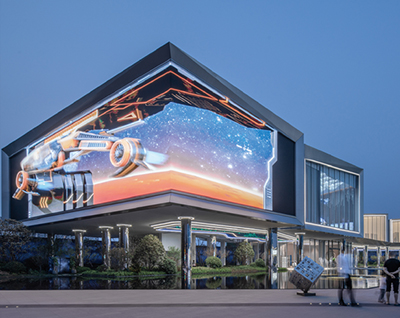
In addition to strength and durability, engineers must also consider maintainability during the design stage. Large outdoor LED displays often feature complex structures and expansive surfaces, which can make inspection and maintenance challenging.
To address this, designers should integrate practical access solutions into the structure. For example, they can include maintenance walkways, cable routing channels, and safe access points for technicians. At the same time, a well-organized structural layout helps reduce unnecessary complexity and redundancy. This approach not only lowers maintenance costs but also improves efficiency and ensures the display continues to operate reliably over time.
In summary, the steel structure of a large outdoor LED display plays a foundational role in its overall performance. By prioritizing safety, ensuring long-term durability, and designing for easy maintenance, engineers can create structures that support stable, secure, and efficient operation for years to come.
+86 18688923792
+86-755-23312336
4th Floor, Building B, Zhonghe Building, Taiwan Industrial Zone, 2132 Songbai Road, Shiyan Street, Bao'an District, Shenzhen.


Emall us with any questions or inquiries or use our contact data.We would be happy to answer your questions.
Toosen Professional Manufacturer of led sphere display,led screen globe,led ball display,spheric led screen,spherical led display, Led Special-shaped LED manufacturer, LED factory,Manufacturers & Suppliers,Factory & Exporters. Looking forward to your cooperation.
Copyright © 2010-2026 Toosen LED All Rights Reserved
Theme by WordPress