-
English


Recently, we prepared a batch of special-shaped LED screens for shipment from China to the United States. Before loading, each screen was inspected and packed according to its shape, structure, and transportation requirements.
Packing a standard flat LED display is relatively simple. Regular cabinets can usually be arranged in rows inside flight cases or wooden crates. A special-shaped LED screen is different.
Sphere LED displays, cylindrical screens, bottle-shaped displays, can-shaped LED screens, and other irregular structures may have curved surfaces, custom frames, and different module sizes. Some areas are also more sensitive to pressure and impact.
For this shipment to the USA, proper special-shaped LED screen packaging was important not only for protecting the LED modules but also for keeping the complete structure stable during international transportation.
The packaging method also changes depending on whether the screen travels by air or sea. Air freight focuses more on weight, dimensions, and impact protection, while sea freight requires additional attention to moisture, vibration, and longer transit times.
So, how are special LED screens packed for air and sea freight?
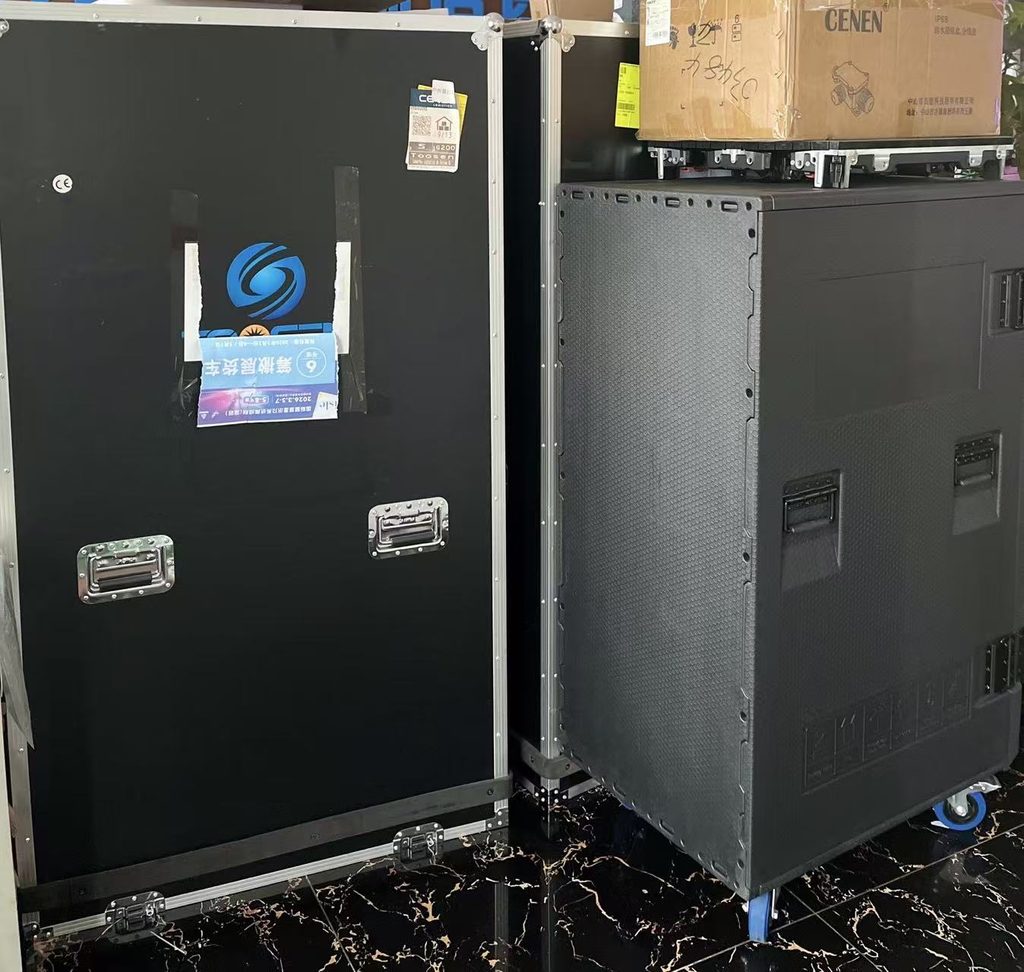
A traditional LED cabinet usually has a flat, regular structure. Multiple cabinets can be placed side by side inside the same case.
A special-shaped LED screen, however, can be designed as a sphere, cylinder, bottle, can, cube, or completely customized structure.
This creates several packaging challenges.
Curved LED modules cannot always carry pressure in the same way as standard flat cabinets. Some screens also contain narrow sections, exposed edges, connection points, or custom metal frames.
A bottle-shaped LED display, for example, may have a narrow neck and wider body. A spherical screen has a completely curved surface, so pressure concentrated on one point should be avoided.
For this reason, simply putting the screen into a large box is not enough.
Custom-cut foam can be placed around important sections to reduce movement. Sensitive surfaces should not directly touch the outer case, while cables, controllers, spare modules, and installation accessories should be secured separately.
Air freight is commonly selected when the project schedule is tight or when customers are shipping samples, replacement parts, or smaller special-shaped LED displays.
Because air freight costs are affected by shipment weight and dimensions, the packaging needs to provide enough protection without becoming unnecessarily heavy.
The LED modules are among the most sensitive parts of the display.
Protective materials such as EPE foam can be placed around the screen to reduce direct impact. Anti-static materials may also be used where necessary to protect electronic components.
Extra protection should be added around curved sections, edges, corners, and other vulnerable areas.
The screen should not move freely after it is placed inside the case.
For irregular products, custom foam inserts can follow the actual shape of the screen. This helps spread pressure across a larger area instead of allowing a small section to carry most of the load.
This is particularly important for spherical LED displays. Their curved surfaces and customized LED modules require different support from conventional flat LED cabinets.
Flight cases are often practical for air transportation because they combine external protection with internal cushioning.
They are also useful when the LED display will be moved repeatedly after arriving in the United States, such as for exhibitions, events, showrooms, or temporary installations.
However, air freight packaging should balance protection with weight. Making the case unnecessarily large or heavy can increase transportation costs.
For larger LED projects, sea freight can be a more economical option.
However, the transportation environment is different from air freight.
A shipment may remain in transit for several weeks and experience humidity, temperature changes, container movement, stacking pressure, and continuous vibration.
As a result, LED display sea freight packaging usually requires stronger long-term protection.
Moisture is an important concern during sea transportation.
LED modules, receiving cards, power supplies, connectors, and other electronic components should remain dry during the journey.
Depending on the shipment and route, moisture-resistant wrapping and desiccants can be added before the outer crate is closed.
The packaging should also be inspected before loading to make sure there are no obvious gaps or damaged areas that could reduce protection.
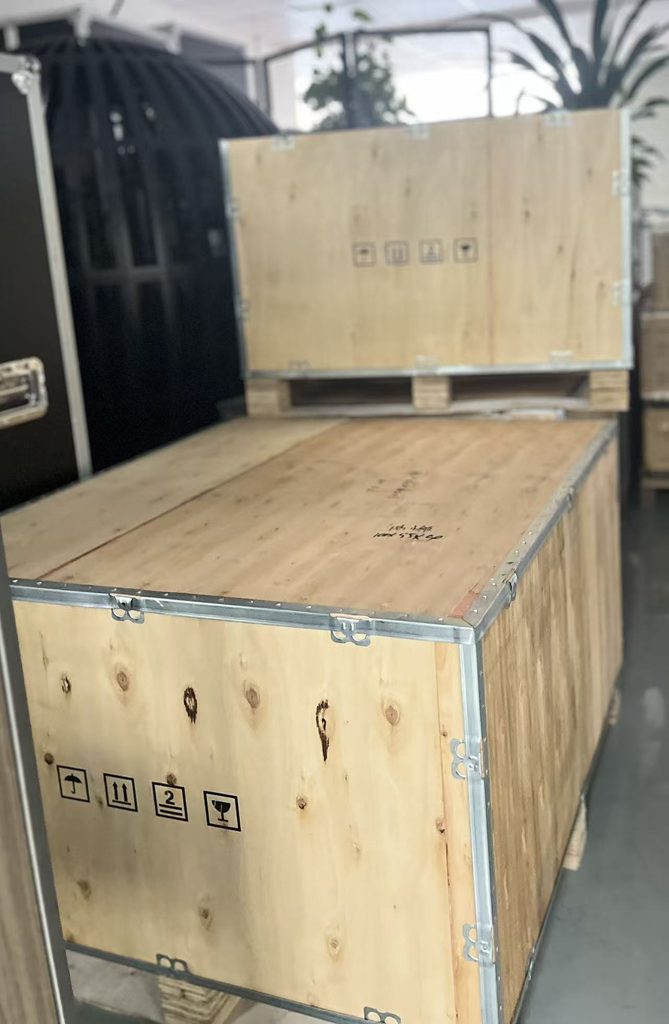
Wooden or plywood crates are commonly used for sea freight, especially for larger or heavier LED structures.
The outer crate provides mechanical protection, while foam and supporting materials inside the crate prevent the screen from directly contacting the wooden walls.
For shipments to the United States, applicable requirements for regulated solid-wood packaging should also be checked before export. Where ISPM 15 applies, compliant wood packaging and the required marking should be used.
Even small repeated movements can cause problems during a long sea journey.
For this reason, the special-shaped LED display should be firmly fixed inside the crate.
Large crates also need to be properly secured inside the shipping container so they cannot slide, fall, or collide with other cargo during transportation.
The two shipping methods require different packaging priorities.
| Factor | Air Freight | Sea Freight |
|---|---|---|
| Main concern | Weight and impact | Moisture and vibration |
| Typical packaging | Flight case | Reinforced wooden crate |
| Transit time | Shorter | Longer |
| Moisture protection | Basic to moderate | More important |
| Weight control | Very important | Less critical |
| Suitable for | Urgent and smaller shipments | Large and heavy shipments |
There is no single best transportation method.
For a special LED screen shipping from China to the USA, the final choice should consider the screen dimensions, total weight, installation date, shipping budget, and project schedule.
One of the most important parts of special-shaped LED screen packaging is matching the internal protection to the actual product shape.
A sphere LED screen requires support around its curved surface. The packaging should avoid concentrating pressure on a single module or small area.
A cylindrical screen requires protection around its circumference as well as its top and bottom sections.
A can-shaped LED display may require customized foam around the body, shoulder, neck, or base.
The narrow sections should not be used as the main load-bearing points during transportation.
Highly customized screens may require special foam molds, internal brackets, or separate packaging for detachable sections.
In some projects, dividing a large structure into several protected sections can also make transportation and installation easier.
Accessories should not be allowed to move freely around the LED display.
Items such as controllers, power cables, signal cables, spare LED modules, power supplies, mounting accessories, and installation tools should be organized and secured separately when necessary.
This prevents hard components from hitting the LED modules during transportation.
Clear labels can also help the installation team in the United States identify each package and find the correct accessories quickly after delivery.
When the shipment arrives in the USA, the packaging should be inspected before installation begins.
First, check the flight case or wooden crate for visible impact, deformation, broken sections, or signs of moisture.
After opening the package, inspect the LED modules, curved surfaces, corners, connectors, cables, and structural components.
If possible, perform a basic power-on test before installation.
For larger projects, taking photos during unpacking is also useful. It creates a record of the condition of the screen when it arrived and can help identify whether any damage happened during transportation.
Special-shaped LED displays are often manufactured specifically for one project.
Unlike standard LED cabinets, a customized curved module, frame, or structural component may not always be easy to replace locally.
Good packaging therefore protects more than the LED screen. It also helps protect the installation schedule.
At TOOSEN, we provide spherical, cylindrical, bottle-shaped, can-shaped, and other customized LED display solutions for international projects. Depending on the screen structure and transportation method, protective foam, flight cases, wooden crates, and customized internal supports can be used for long-distance shipping.
For shipments from China to the United States and other overseas markets, packaging should be considered as part of the project rather than as the final step after production.
Special-shaped LED screens can be shipped by air or sea depending on their size, weight, delivery schedule, and project requirements. Custom foam, flight cases, or reinforced crates can be used to protect the screen during transportation.
Yes. Air freight is suitable for many smaller or urgent special LED screen shipments. Packaging should provide sufficient impact protection while controlling total weight and dimensions.
+86 18688923792
+86-755-23312336
4th Floor, Building B, Zhonghe Building, Taiwan Industrial Zone, 2132 Songbai Road, Shiyan Street, Bao'an District, Shenzhen.


Emall us with any questions or inquiries or use our contact data.We would be happy to answer your questions.
Toosen Professional Manufacturer of led sphere display,led screen globe,led ball display,spheric led screen,spherical led display, Led Special-shaped LED manufacturer, LED factory,Manufacturers & Suppliers,Factory & Exporters. Looking forward to your cooperation.
Copyright © 2010-2026 Toosen LED All Rights Reserved
Theme by WordPress