-
English


Before manufacturers ship any LED display—including spherical, cylindrical, wave-shaped, curved, or other irregular LED screens—they perform aging tests as a critical quality-control procedure. For irregular LED displays in particular, aging tests play an even more important role because these structures involve greater mechanical complexity and much higher reliability requirements.
Irregular LED displays use non-standard module shapes, which makes the layout of PCBs, ribbon cables, and connectors far more complex than in conventional rectangular LED screens.
During a 48–72 hour full-load aging test, continuous operation generates thermal expansion and contraction inside the display. This process helps engineers identify hidden defects such as:
Many of these issues remain invisible during normal room-temperature inspections. However, long-term operation can quickly turn them into dead pixels, flickering LEDs, or intermittent failures.
Irregular LED structures create uneven spacing, varying module orientations, and inconsistent airflow paths. As a result, certain areas may develop thermal hotspots.
Aging tests help verify:
By identifying overheating risks early, manufacturers can prevent premature component failure after installation.
Irregular LED displays usually combine many custom-made modules, often produced across different manufacturing batches. Even slight differences in LED brightness or color coordinates can affect overall image quality.
During the aging process, engineers can observe:
This inspection allows manufacturers to perform precise pixel-by-pixel calibration before shipment, reducing the risk of mura effects, mosaic patterns, or uneven visuals after installation.
Compared with conventional flat screens, irregular LED displays typically require more complicated power distribution and signal transmission paths. Curved surfaces and customized structures introduce additional connectors, transfer points, and routing complexity.
Long-duration aging tests help confirm:
This process ensures that the display maintains stable communication and power performance during long-term operation.
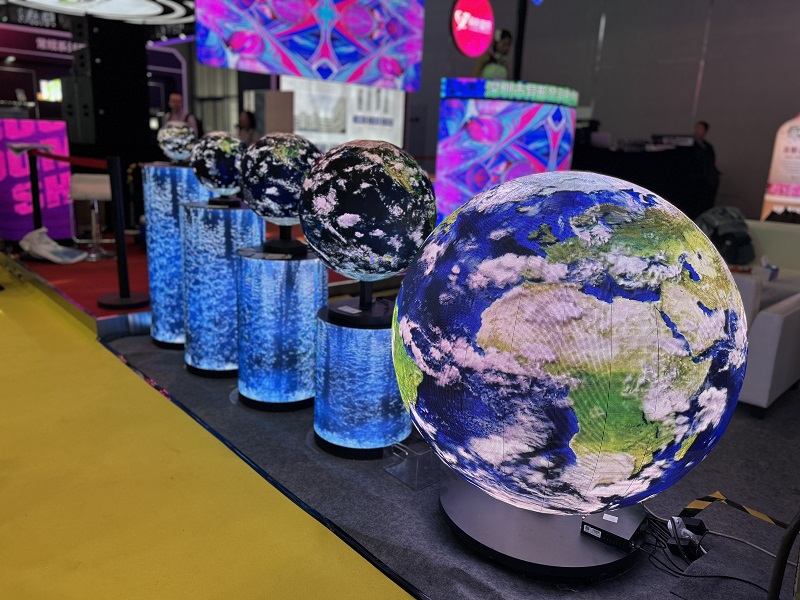
Manufacturers often install irregular LED displays in difficult environments such as:
Once installed, repairing even a single failed LED module may require high-altitude work, specialized disassembly procedures, or custom replacement parts.
Aging tests intercept early failures at the factory stage, which significantly lowers on-site failure rates and reduces long-term maintenance costs.
Irregular LED displays frequently serve premium applications, including:
In these environments, clients expect near-zero visible defects and uninterrupted performance.
As a result, aging tests serve not only as an internal quality-control measure but also as an important proof of product reliability. In many projects, passing aging tests has become a mandatory requirement during engineering acceptance and final delivery.
For irregular LED displays, aging tests go far beyond routine factory inspection. They function as a comprehensive stress-screening process specifically designed to address the challenges of:
By eliminating potential failures before shipment, aging tests help ensure long-term stability, reliable operation, and consistent visual performance throughout the display’s service life.
+86 18688923792
+86-755-23312336
4th Floor, Building B, Zhonghe Building, Taiwan Industrial Zone, 2132 Songbai Road, Shiyan Street, Bao'an District, Shenzhen.


Emall us with any questions or inquiries or use our contact data.We would be happy to answer your questions.
Copyright © 2010-2026 Toosen LED All Rights Reserved
Theme by WordPress