-
English


June 2026 — The 2026 FIFA World Cup is underway across North America, and from stadium scoreboards to public fan zones, LED displays are carrying the weight of the world’s most-watched sporting event. But not all LED screens are built for this job. Broadcasting a football match to tens of thousands of live spectators — while cameras capture every frame for millions more at home — demands specifications that go far beyond a typical commercial display.
So what actually matters when you’re choosing an LED screen for World Cup-grade viewing? Let’s go through it — with real examples from the field.
If an LED display’s refresh rate is too low, broadcast cameras will catch it. Scan lines, flickering, and rolling dark bands show up on television feeds and smartphone recordings alike — ruining the viewing experience for anyone not standing directly in front of the screen.
For professional sports, 3,840Hz is the widely accepted minimum. But for venues where slow-motion replay and high-frame-rate cameras are in play, 7,680Hz has become the real standard.
At TOOSEN, the outdoor spherical LED display specifically designed for the World Cup sports application operates at a refresh rate of 7680Hz as the baseline – not an upgrade. In a recent outdoor installation, a broadcast camera shooting at 120fps, when replaying high-speed football scenes in slow motion mode, did not exhibit any visible flickering or scan line artifacts.
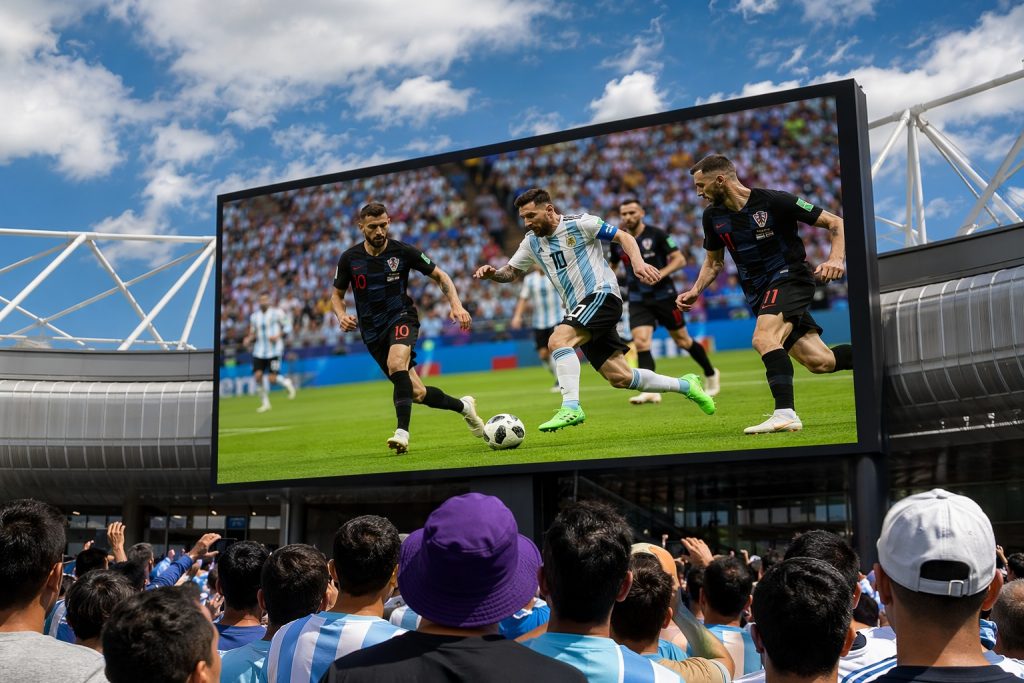
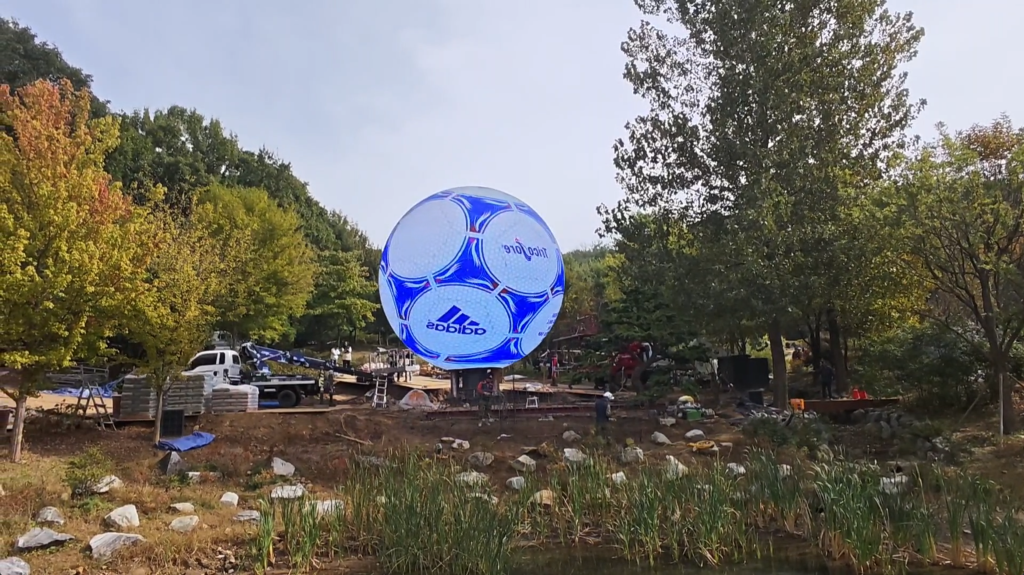
World Cup matches happen in broad daylight. An outdoor LED screen that looks bright indoors can wash out completely under direct sun.
Industry guidance puts outdoor sports displays at 6,000 to 10,000 nits. But the number on a spec sheet only tells half the story. What matters is sustained brightness — the ability to maintain that output hour after hour in rising temperatures, without thermal throttling.
TOOSEN’s outdoor-rated spherical displays are field-tested at 5,000+ nits in direct daylight. In one permanent rooftop installation, the display cycled through high-definition Earth imagery, festive content, and abstract visuals — all remaining sharply visible from street level at noon.
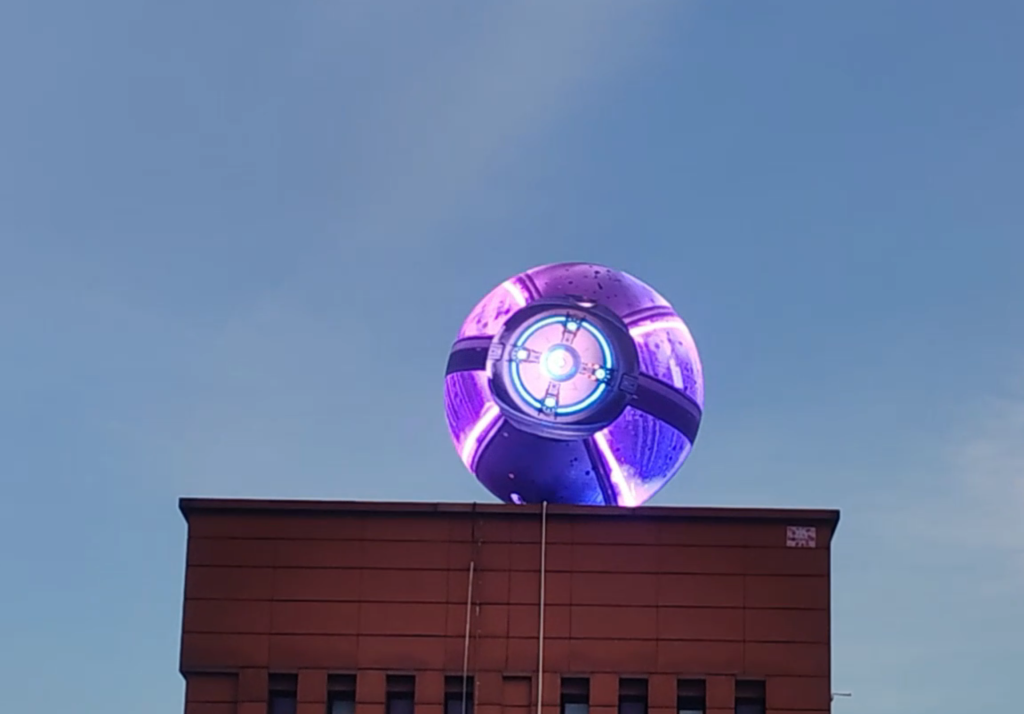
Technologies like black-surface LEDs, COB packaging, and advanced thermal management further improve real-world contrast and prevent brightness degradation during extended daytime operation.
Pixel pitch — the distance between LED centers — determines how sharp the image looks from a given viewing distance.
| Scenario | Recommended Pixel Pitch |
|---|---|
| Stadium scoreboards and large outdoor screens (30m+ viewing) | P6, P8, P10 |
| Mid-range outdoor viewing zones (15–30m) | P4, P5 |
| VIP lounges, sports bars, indoor broadcast studios (2–5m) | P1.25–P1.875 |
The key is matching pitch to distance. A P2 screen viewed from 50 meters away is wasted budget. A P8 screen viewed from 5 meters looks pixelated. Get the pairing right and you optimize both visual quality and cost.
A football travels at over 100 km/h. Players sprint, pivot, and change direction in fractions of a second. If the display’s response time can’t keep up, the image smears — and viewers lose track of the ball.
LED displays with fast pixel response characteristics minimize motion blur and ghosting. This becomes critical during close-up replays, where the difference between a crisp image and a blurry one determines whether viewers stay engaged or look away.
In stadiums and fan zones, spectators are spread across wide arcs — some directly in front of the screen, others far to the sides.
A high-quality LED display should maintain color accuracy and brightness at angles approaching 160° horizontally and vertically. This ensures that a fan sitting at the far edge of a public plaza gets the same visual experience as someone standing dead center.
A screen going dark during the World Cup final isn’t just inconvenient — it’s a viral disaster.
Professional installations mitigate this risk with dual signal paths and backup power systems. If the primary transmission line or power source fails, the secondary system takes over instantly. For permanent outdoor installations in particular, redundant architecture is the difference between a reliable asset and a liability.
World Cup host cities span climates from dry desert heat to tropical humidity. Outdoor LED displays need to handle all of it.
IP65 — protection against dust ingress and water jets — is the baseline for outdoor LED installations. The enclosure, thermal management system, and weather sealing must work together to maintain stable internal temperatures and prevent moisture damage during extended outdoor operation. TOOSEN’s outdoor displays are tested through thermal cycling and water ingress validation before leaving the factory.
| Spec | Minimum | Recommended | Why |
|---|---|---|---|
| Refresh Rate | 3,840Hz | 7,680Hz | Eliminates camera flicker at all frame rates |
| Brightness | 5,000 nits | 8,000+ nits | Visible in direct sunlight |
| Pixel Pitch | Match to distance | P4–P8 outdoor; P1.25–P2.5 indoor | Sharpness without wasted budget |
| Viewing Angle | 140° | 160° H/V | Consistent image across crowds |
| Protection | IP65 | IP65 + thermal management | Survives rain, dust, heat |
| Redundancy | Dual signal | Dual signal + dual power | Zero downtime during events |
A World Cup LED display isn’t just a big TV. It’s an engineered system where refresh rate, brightness, weather protection, and redundancy work together under the most demanding conditions in professional sports.
With the 2026 tournament in full swing, stadiums and fan zones around the world are proving the point: the screens that perform are the ones specified with real-world conditions in mind — not just the best numbers on a brochure.
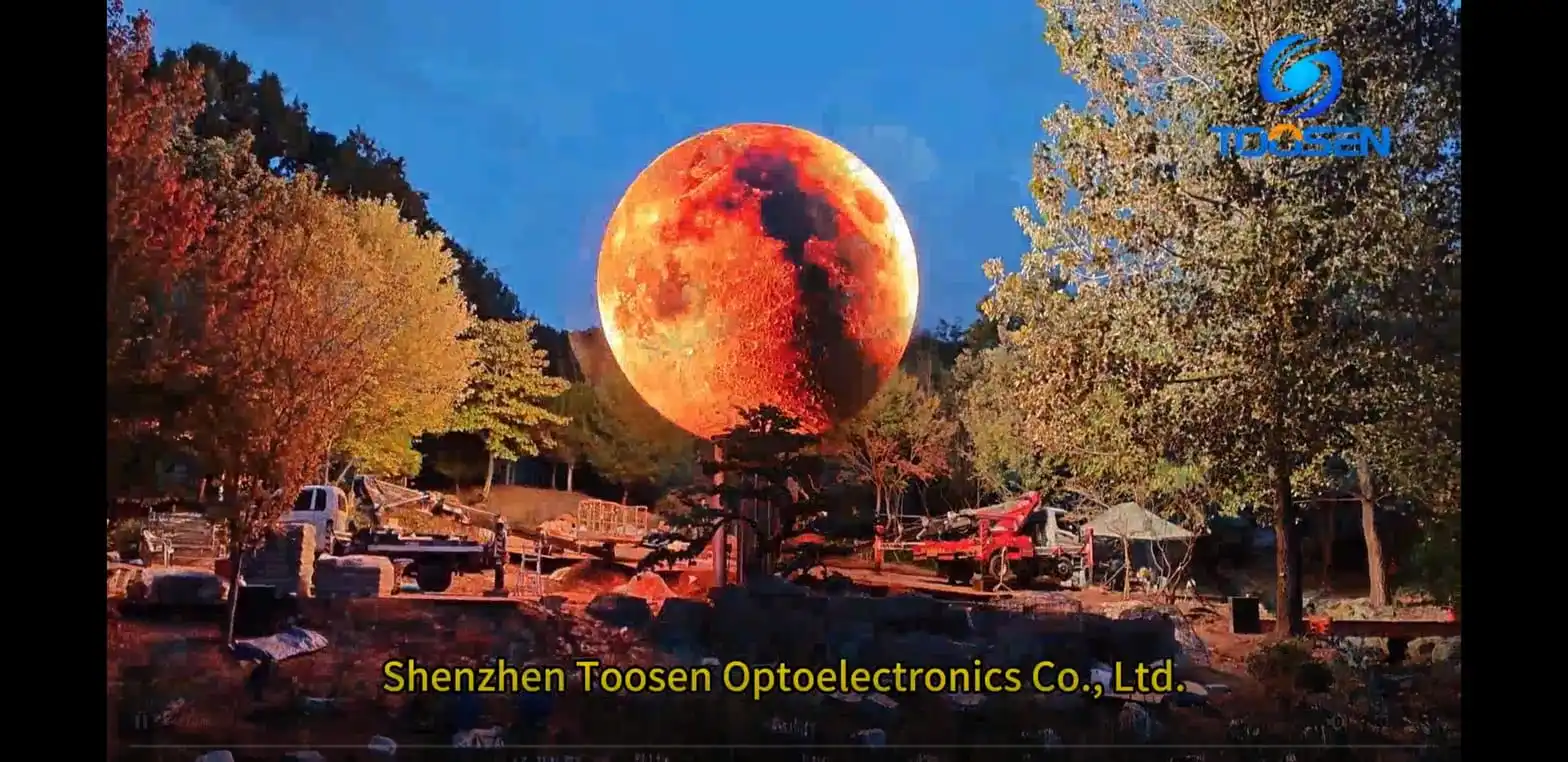
At TOOSEN, outdoor-rated spherical and custom-shaped LED displays are engineered for permanent outdoor deployment — with 7,680Hz refresh, 5,000+ nit sustained brightness, and IP65 protection validated through factory-level testing. Whether for a stadium, a public fan zone, or a commercial landmark, the spec sheet matters. But real-world performance matters more.
About TOOSEN: Shenzhen Toosen Optoelectronics Co., Ltd. manufactures spherical, custom-shaped, and outdoor LED displays for sports venues, commercial landmarks, and public installations worldwide.
Contact: andy@tosled.com | toosenled.com | toosen.com | toosled.com
+86 18688923792
+86-755-23312336
4th Floor, Building B, Zhonghe Building, Taiwan Industrial Zone, 2132 Songbai Road, Shiyan Street, Bao'an District, Shenzhen.


Emall us with any questions or inquiries or use our contact data.We would be happy to answer your questions.
Copyright © 2010-2026 Toosen LED All Rights Reserved
Theme by WordPress