-
English


As global football fans look ahead to the next FIFA World Cup, event organizers continue to search for more immersive and eye-catching display technologies. Among all creative LED solutions, spherical LED displays have become a popular choice because they resemble footballs, deliver 360-degree visibility, and create unforgettable visual experiences.
You can now find spherical LED screens in sports arenas, fan zones, shopping malls, museums, and brand activations. However, their unique curved structure also makes them more delicate than conventional flat LED displays. Unlike standard LED walls, spherical screens rely on specially designed trapezoidal or flexible LED modules that work together to form a perfect sphere. As a result, improper handling can quickly cause damage.
Understanding what harms a spherical LED display can help you protect your investment and extend its service life.
Many users underestimate how sensitive spherical LED modules can be. Because the modules follow a curved surface, pressure does not distribute evenly across the screen.
If someone presses the display with their fingers, bumps it with equipment, or accidentally strikes the surface, LED lamps may loosen or fall off. In more severe cases, the internal circuit board can crack, especially on fine-pitch indoor displays that use extremely small SMD LEDs.
Therefore, always keep unnecessary contact with the screen to a minimum.
Cleaning the screen incorrectly often causes permanent damage.
For example, rough cloths can scratch LED lamps and protective masks. More importantly, solvents such as alcohol, thinner, or industrial cleaners can attack the protective coating on flexible modules. Over time, these chemicals may discolor the surface, deform the mask, or weaken the bond between LEDs and the module.
Instead, use cleaning products specifically designed for LED displays.
Spherical LED displays contain a complex network of power cables, signal cables, and internal structural components. Furthermore, each cabinet section interlocks precisely with neighboring sections to maintain the sphere’s geometry.
If an inexperienced operator removes a module by force, they may tear internal cables or distort the screen structure. Consequently, gaps may appear between modules, and future assembly may become difficult or impossible.
For this reason, only trained technicians should perform maintenance or disassembly.
Moisture remains one of the biggest threats to any LED display.
When water enters module seams or internal components, it can trigger short circuits and component failure. Indoor spherical displays face particularly high risks because manufacturers typically design them for controlled indoor environments rather than direct exposure to water.
Therefore, always maintain proper humidity levels and prevent liquids from reaching the screen during cleaning.
Although spherical LED displays look compact from the outside, they generate significant heat internally. Power supplies, receiving cards, and LED lamps all produce heat during operation.
If decorative coverings block ventilation openings or restrict airflow around the sphere, internal temperatures can rise rapidly.
Excessive heat causes several problems:
In general, prolonged operation above 60°C (140°F) can significantly reduce display reliability.
Therefore, always keep ventilation pathways clear and allow adequate airflow around the entire structure.
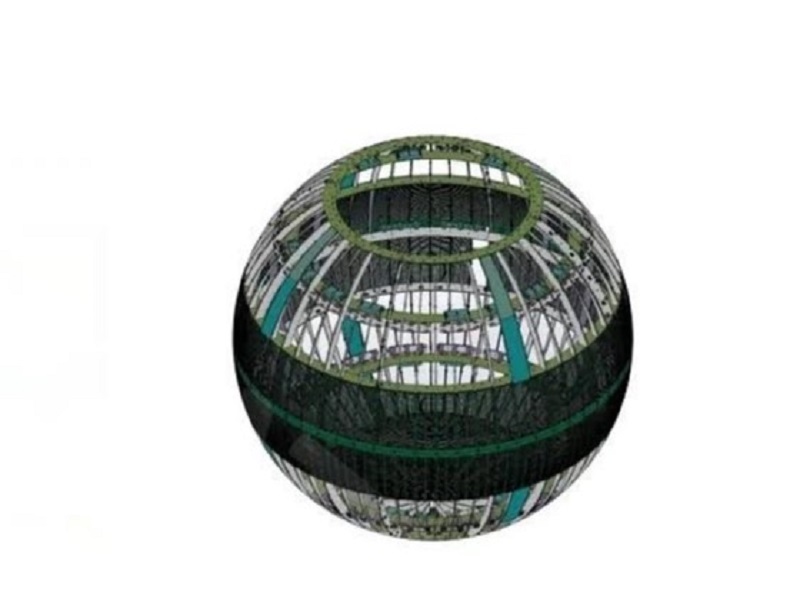
Not all areas of a spherical LED display dissipate heat equally. Typically, the upper sections retain more heat than the lower sections.
When the screen continuously displays a full-white or high-brightness static image for hours or even days, certain modules operate under constant peak current conditions. As a result, those areas experience excessive heat buildup.
Over time, this practice can cause:
Instead, use dynamic content and regularly change visual material to distribute workload more evenly across the display.
Many users overlook the importance of startup procedures.
A common mistake involves powering on the LED display before the control computer. This sequence can expose the display system to unnecessary electrical fluctuations during computer startup.
The recommended procedure is:
Additionally, install voltage stabilizers or surge protection devices in locations with unstable power grids. Sudden voltage spikes can damage internal power supplies and sensitive control components.
Regular maintenance helps preserve image quality and system reliability.
For routine cleaning:
Most importantly, never press directly on the screen surface while removing dirt or stains.
Spherical LED displays create stunning visual effects and perfectly complement football-themed events, World Cup fan experiences, and immersive brand activations. However, their sophisticated curved construction requires more careful handling than traditional flat LED screens.
By preventing physical impact, controlling environmental conditions, following proper operating procedures, and performing regular maintenance, you can maximize the lifespan of your spherical LED display while preserving its brightness, color accuracy, and overall performance for years to come.
+86 18688923792
+86-755-23312336
4th Floor, Building B, Zhonghe Building, Taiwan Industrial Zone, 2132 Songbai Road, Shiyan Street, Bao'an District, Shenzhen.


Emall us with any questions or inquiries or use our contact data.We would be happy to answer your questions.
Copyright © 2010-2026 Toosen LED All Rights Reserved
Theme by WordPress