-
English


When selecting an LED display, many buyers focus on pixel pitch, brightness, and refresh rate. However, the connection method between modules and cabinets also plays a crucial role in installation efficiency, system stability, and long-term maintenance.
In the LED display industry, manufacturers generally use two connection methods: hard connection and soft connection. Understanding the differences between them can help you choose the right solution for your project.
A hard connection design uses integrated connectors, such as pin contacts or docking interfaces, to connect LED modules or cabinets directly. Instead of relying on external power cables and signal ribbon cables, the modules plug into each other through built-in connection points.
As a result, installers can assemble and disassemble the display much faster while keeping the internal structure clean and organized.
A soft connection design uses traditional power cables and signal ribbon cables to link LED modules or cabinets together. Each module connects through flexible wiring, creating a daisy-chain transmission path for power and data.
Because the cables remain flexible, this approach offers greater adaptability for custom-shaped and curved LED installations.
| Comparison Factor | Hard Connection | Soft Connection |
|---|---|---|
| Connection Method | Uses integrated connectors for direct cabinet or module docking. No external ribbon cables are required. | Uses external power cables and signal cables to connect modules and cabinets. |
| Installation Speed | Enables fast assembly and disassembly, reducing installation time significantly. | Requires manual cable routing and connection, which increases installation time. |
| Maintenance | Technicians can quickly locate and replace individual modules, improving service efficiency. | Maintenance takes longer because technicians must disconnect and reconnect multiple cables. |
| Appearance | Keeps wiring hidden inside the structure, creating a clean and professional look. | Exposed cables may create a less organized appearance if installers do not manage them properly. |
| Reliability | Provides stable electrical connections and reduces the risk of loose cables. | Cable aging, vibration, or loose connections can occasionally affect performance. |
| Flexibility | Works best for standard cabinet designs and fixed installations. | Adapts easily to curved, cylindrical, and custom-shaped LED displays. |
| Cost | Typically costs more because of the integrated connection system. | Usually offers a more economical solution. |
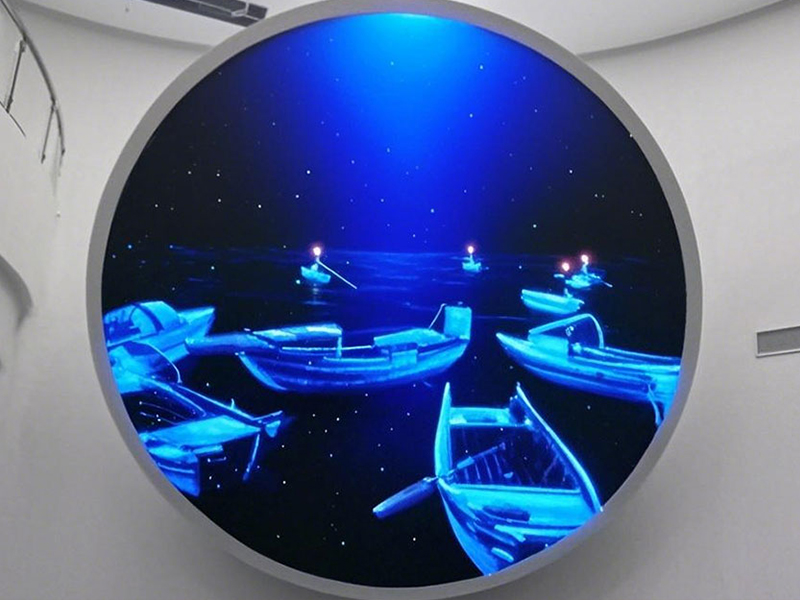
Many high-end LED display projects now use hard connection technology because it delivers several important benefits:
Installers can connect cabinets directly without managing numerous signal and power cables. Consequently, setup and teardown become much faster.
If a module develops a fault, technicians can quickly remove and replace it. This process reduces downtime and improves maintenance efficiency.
Since the wiring remains hidden inside the cabinet structure, the entire display looks more professional and organized.
Integrated connectors reduce the possibility of loose cables, poor contacts, and wiring errors. Therefore, the display can operate more reliably during long-term use.
Although hard connection systems continue to gain popularity, soft connection technology still offers unique advantages.
Flexible cables allow modules to bend and adapt to complex shapes. As a result, manufacturers can create curved LED screens, cylindrical LED displays, spherical LED screens, and other creative installations.
Soft connection systems generally cost less to manufacture. Therefore, they remain a popular choice for budget-conscious projects.
When a project requires an unconventional structure or customized design, flexible wiring often makes installation easier.
The best choice depends on your priorities.
Both hard connection and soft connection technologies play important roles in the LED display industry. Hard connection systems deliver faster installation, cleaner structures, and higher reliability. Meanwhile, soft connection systems provide greater flexibility and cost advantages, especially for creative and custom-shaped LED screens.
Before making a decision, evaluate your project’s installation requirements, maintenance expectations, design complexity, and budget. By matching the connection method to your application, you can maximize both performance and long-term value.
+86 18688923792
+86-755-23312336
4th Floor, Building B, Zhonghe Building, Taiwan Industrial Zone, 2132 Songbai Road, Shiyan Street, Bao'an District, Shenzhen.


Emall us with any questions or inquiries or use our contact data.We would be happy to answer your questions.
Copyright © 2010-2026 Toosen LED All Rights Reserved
Theme by WordPress