-
English


A spherical LED display may pass a normal lighting test and still contain a weak power cable termination.
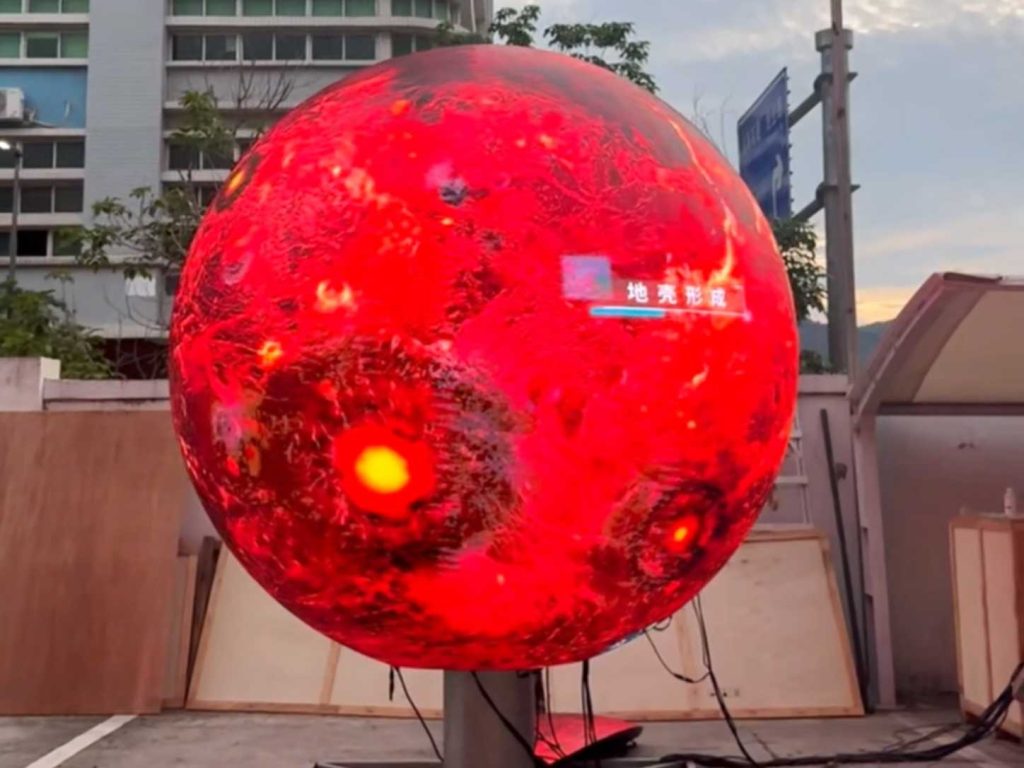
This is because a poor crimp connection can carry current when the screen is standing still in the factory. But during packing, transportation, installation, or later maintenance, the cable may be pulled, bent, or moved. A weak terminal can then loosen and create unstable power delivery.
For this reason, a spherical LED display power cable crimp pull test is useful before shipment. It helps technicians find connections that look acceptable but do not have enough mechanical strength.
Inside a spherical LED display, power cables usually connect power supplies, distribution boards, modules, and other electrical components.
Unlike a flat LED wall, a spherical structure often has limited internal space. Cables may follow curved paths and pass through narrow gaps between modules and the supporting frame.
If one crimp terminal is weak, several problems may appear:
A loose termination may also increase electrical resistance. Under higher current, this resistance can generate heat around the connector.
The problem is often difficult to find after the spherical LED display has already been installed.
Weak cable terminations normally come from the crimping process rather than from the cable itself.
One common reason is using the wrong terminal size. If the terminal is too large for the conductor, the crimp cannot hold the copper strands firmly.
Incorrect stripping length is another problem. Too much exposed conductor may leave copper outside the terminal, while too little stripping may cause the insulation to enter the crimping area.
Other common causes include:
Visual inspection alone cannot always detect these problems.
A terminal may look tight while the conductor is only partially compressed inside it.
The basic test is simple.
First, select several power cable samples from the assembled spherical LED display. The samples should include different cable positions, especially areas near power supplies, distribution points, maintenance openings, and sections where cables must bend around the sphere.
Next, inspect the terminal visually.
Check whether:
After visual inspection, secure the terminal and apply a controlled pulling force to the cable.
The force should be applied along the cable direction instead of sideways. Pulling at an angle can test the connector housing instead of the actual crimp.
For production inspection, a pull-force gauge is better than pulling by hand because it provides repeatable measurements.
The goal is not simply to see whether the cable immediately falls out.
Technicians should watch for any movement between the conductor and the crimp terminal.
A weak termination may show several warning signs:
If movement appears under a relatively small force, the termination should be replaced and the crimping process checked.
The exact acceptable pull force depends on conductor size, terminal type, and the manufacturer’s specification. Therefore, factories should not use one fixed number for every cable.
Mechanical strength is only one part of the inspection.
After the pull test, power the spherical LED display again and check the tested circuit.
Measure the DC voltage at important points, especially at the power supply output and at modules located farther from the power source.
Technicians can also run the display using a bright white image or another high-load test pattern.
A weak connection may remain stable under low load but heat up when current increases.
For important power connections, temperature inspection after a burn-in test can provide another useful check. A terminal that is noticeably hotter than similar connections may have higher resistance.
Even a correctly crimped terminal can fail if cable routing creates continuous tension.
Inside a spherical LED screen, cables should not be stretched tightly between two fixed points.
A small service loop can reduce stress during assembly and future maintenance. Cables should also be supported so their weight does not pull directly on terminals.
For curved sections, the bend radius should be controlled. Sharp bends close to a connector can repeatedly stress the conductor during service.
Cable ties, clips, sleeves, and strain-relief parts should therefore be treated as part of the power connection system, not just accessories.
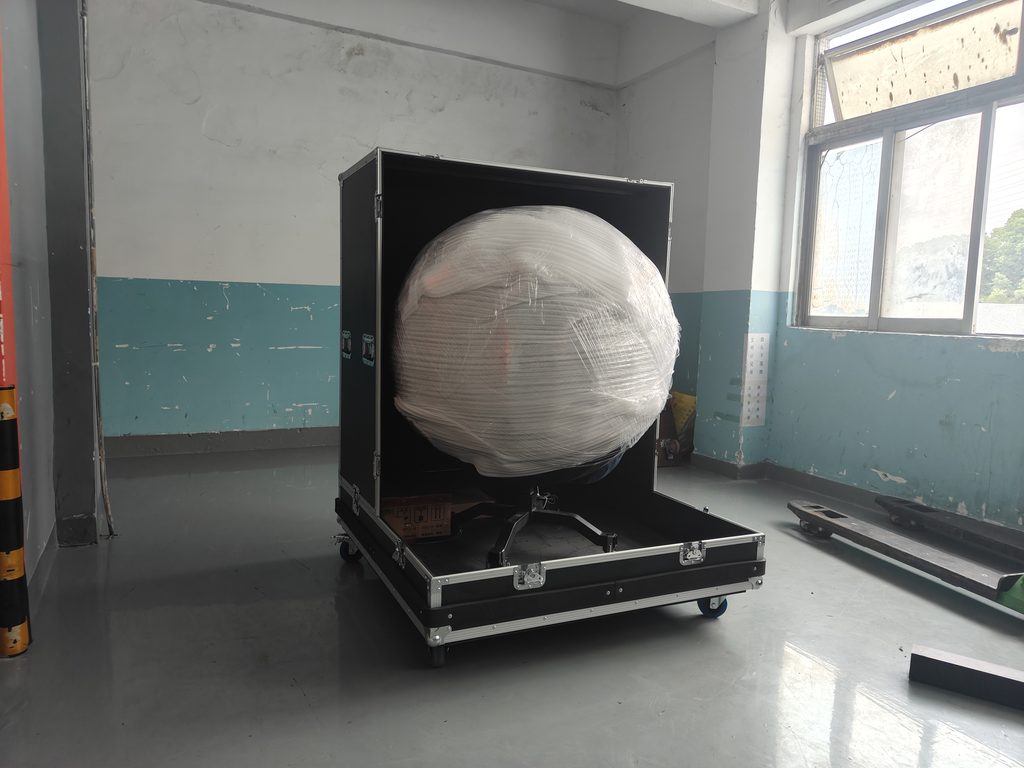
Consider a spherical LED display that works normally during the first factory test.
During pre-shipment inspection, technicians perform pull tests on power cables from several internal sections.
Most connections remain stable, but one cable near a power distribution point begins to move inside its crimp terminal.
The terminal is replaced and the cable is crimped again using the correct tool.
A second pull test shows no movement. The screen then completes another power-on and aging test without abnormal heating or voltage fluctuation.
Finding this issue in the factory is much easier than opening the spherical structure after installation.
A manual check can find very loose terminals, but it cannot provide consistent test force. A pull-force gauge is better for controlled quality inspection.
For destructive or high-force testing, sample testing is normally more practical. Critical connections can receive additional inspection according to the production quality plan.
No. Mechanical strength and electrical performance should both be checked. Voltage, resistance, temperature, and load testing can reveal problems that a pull test cannot.
A spherical structure contains curved cable routes and limited service space. Repairing an internal power connection after installation can require removing several modules.
A reliable spherical LED display depends on many small electrical connections working together.
A weak crimp terminal may cost only a small amount to replace in the factory, but after shipment it can cause black sections, overheating, unstable brightness, and unnecessary maintenance.
At Toosled, spherical and customized LED displays can be inspected through assembly checks, cable routing inspection, power testing, aging tests, and pre-shipment quality control.
Adding a power cable crimp pull test to this process helps identify weak terminations before the display leaves the factory and makes the complete power system more reliable during transportation, installation, and long-term operation.
+86 18688923792
+86-755-23312336
4th Floor, Building B, Zhonghe Building, Taiwan Industrial Zone, 2132 Songbai Road, Shiyan Street, Bao'an District, Shenzhen.


Emall us with any questions or inquiries or use our contact data.We would be happy to answer your questions.
Toosen Professional Manufacturer of led sphere display,led screen globe,led ball display,spheric led screen,spherical led display, Led Special-shaped LED manufacturer, LED factory,Manufacturers & Suppliers,Factory & Exporters. Looking forward to your cooperation.
Copyright © 2010-2026 Toosen LED All Rights Reserved
Theme by WordPress